


Seller Guide
How to Resell Pre-Owned Light Fixtures
If you've got lamps, pendants, sconces or chandeliers you're planning not to use, you may be able to resell them to buyers nearby or online. This guide is meant to help you avoid problems, save time and maximize earnings.
About Pre-Owned Lighting
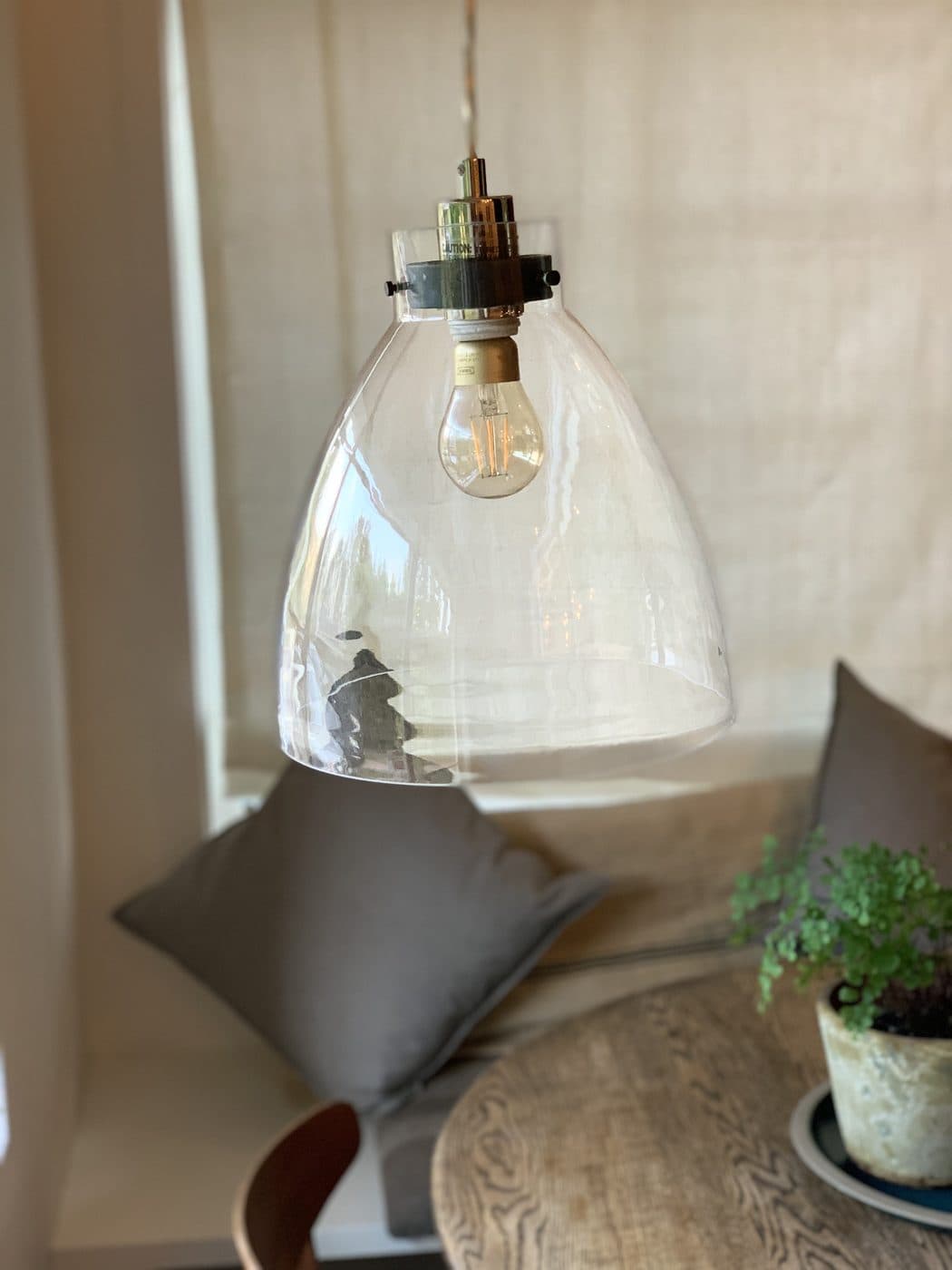
Lighting is one of the easiest ways to change the character of a space, and its design and technology are constantly evolving. As a result, lights are among the most frequently updated household fixtures. Lights are also frequently over-ordered or misordered. It can be hard to judge upfront what a light will look like in a given space, and buyers often change their minds once lights are installed. This makes lighting a popular category for resale, with buyers and sellers. Here's how to get started.
Step 1
Identify Your Light
Look for the brand and model number on your order, invoices, original box or documentation. If you no longer have them, check for a label inside the canopy (the cover against the ceiling or wall), on the LED driver, or inside the shade. Photograph any labels you find for reference later.
Search for the model on the manufacturer's website or an authorized retailer's site. Make sure the finish, size and other configuration details match your light; the same design may come in several versions. Save the product link for your listing.
If you can't find the brand or model of your light, it may be hard to sell, unless it's a unique, artistic design or a vintage piece. In either case, you'll need to do some research online, or talk to an antique or vintage lighting dealer, to identify it.
Step 2
Estimate What It's Worth
You may have in mind the original price you paid for the light, but you'll need to understand what people are generally paying for your model, or similar items, today. If your light is still available new, find its current market price online. If it's no longer available new, search for it used on Unbuilt or sites like eBay.
Generally speaking, newer designer-brand lights sell for 25% to 35% off the retail price. However, it often makes sense to reduce the price further to account for other factors:
- Brand and value. Expensive lights from well-known designer brands tend to hold their value best. Generic or inexpensive lights usually need a bigger discount.
- Condition. The better the condition, the closer you can price to the top of that range. Wear on a part that faces the wall or ceiling once the light is installed matters less.
- Missing parts. If any parts are missing, such as the canopy, chain, glass shades or mounting hardware, expect to lower your price, because most buyers don't want to track down replacements. On a valuable light, buyers are usually more forgiving of a shortened chain or a missing canopy.
- Original box and paperwork. A light that comes with its original box and installation instructions reassures buyers and is easier to pack safely. Without them, you may need to lower the price slightly.
- Availability. If your light is widely sold and often on sale at major retailers, buyers can easily find a good deal on a new one. Compare your price with the sale price, not the full retail price. Lights that are hard to find, or sold only through designers and showrooms, can often sell for more.
- Discontinued models. If your light is no longer made, some buyers will worry about finding replacement parts later, so it may take a lower price to sell.
- Lights made for other countries. Lights sold in the US run on 120 volts and carry a UL, ETL or CSA safety mark. Most European lights run on 220–240 volts and carry a CE mark instead, and a US buyer may need an electrician to adapt one. Expect to sell these locally, or at a lower price.
- Shipping. Many retailers include shipping in their price, so buyers will compare your price plus shipping with what they would pay for the light new. On Unbuilt, shipping a single light usually costs the buyer about $20–$80, so you may need to lower your price to stay competitive. Local buyers who pick up the light avoid shipping altogether.
For example, a designer pendant that costs $400 new might sell for about $280, or 30% off, and a little less if it's missing its box.
If your estimate is over $100, it's worth selling. If not, see what to do with lights that won't sell.
Step 3
Where to Sell Light Fixtures
You can list a light yourself, have us sell it for you, sell it locally, or sell it to a dealer. The options differ in price, reach and how much work you do.
| Option | Best for | Your effort | Trade-off |
|---|---|---|---|
| List it on Unbuilt (free) | Most lights with a brand and model | Medium: photos, questions, shipping or local pickup | Buyers nationwide; you do the work |
| Consign it with us (apply) | Higher-value lights and sets | Low: we list it, handle buyers and shipping, and can pick it up | We keep a share of the sale |
| Sell it locally | Heavy, fragile or lower-priced lights | Medium: messages, viewing and pickup | No shipping, but fewer buyers |
| Sell it to a dealer | Vintage and antique pieces | Low | Fastest, but expect a lower price |
Selling a chandelier
Modern designer chandeliers sell like other lights. Antique and crystal chandeliers also sell through antique dealers and auction houses. Large chandeliers usually ship by freight, which adds cost for the buyer, so a local buyer is often the simplest sale.
Step 4
Create a Listing
Photos
Take your own photos. Lighting manufacturers often ask for listings that use their product photos to be taken down, and your own photos show the actual light. Remove the bulbs and wipe it with a dry cloth first; polish can strip an aged finish.
- Still installed? Photograph it hanging and switched on before you take it down.
- Still in the box? Opening it turns "new in box" into "open box." Photograph the sealed box with its label showing, and link to the manufacturer's product page.
- Already taken down? Hang it or hold it up against a plain wall or a roll of white paper. To show it lit without wiring it, shine a lamp into the shade.
Add close-ups of the label, all the parts together, the instructions and any damage. If you're comfortable with wiring, you can test the light with a lamp cord fitted with alligator clips: connect the clips to the light's two supply wires with the cord unplugged, keep the clips apart, then plug it in.
Coming soon: an Unbuilt tool that turns your photo of a light into an image of it installed in a room, labeled as AI-generated.
Description
Include:
- Brand and model, with the link from Step 1.
- Measurements: height, overall drop with chain or cable, and the width of the shade and canopy.
- What's included: canopy, mounting plate, screws, connectors and instructions.
- Chain, rod or cable length, noting if it was shortened and whether you kept the extra.
- Bulbs: included or not, and the base type (for example, E26), or that it has built-in LEDs.
- Voltage and safety mark, if known.
- Condition: where any wear is, whether it shows once installed, and whether the light has been tested.
List a matching set, such as three pendants for a kitchen island, as one listing. For several identical lights, list them once with the full quantity.
Step 5
Pack It and Ship It
Use the original box if you have it. Otherwise, take the light apart as far as it comes apart easily, wrap each glass piece separately, and fill the box so nothing touches the sides. Bag small parts and tape the bag to the light. Double-box anything fragile.
Carriers such as UPS and FedEx charge by size as well as weight, so lights cost more to ship than you might expect. Their "dimensional weight" is length × width × height in inches, divided by 139. A 24 × 24 × 30-inch box is billed as about 124 pounds, even if the light weighs 15. Measure and weigh the packed box, then use the carrier's online calculator.
Large chandeliers go on a pallet in a wooden crate and ship by freight, priced by quote. Say so in your listing. If you consign with us, we handle shipping and crating.
What to Do With Lights That Won't Sell
If your light isn't worth selling, it can usually still be used again or recycled.
Donate it. Habitat for Humanity ReStores and local reuse centers accept working light fixtures. Goodwill and other thrift stores take lamps and sometimes chandeliers, but policies vary by store, so call first. You can also give a light away through a local marketplace or community group.
Recycle it. Metal fixtures can go to a scrap metal recycler; brass and copper wiring have value. Fluorescent fixtures need more care: the tubes contain mercury, and ballasts made before 1979 may contain PCBs. Take them to a household hazardous waste site, or check your city's rules.